Loading...
Serving Glendale, CA and surrounding areas. (747) 609-3881
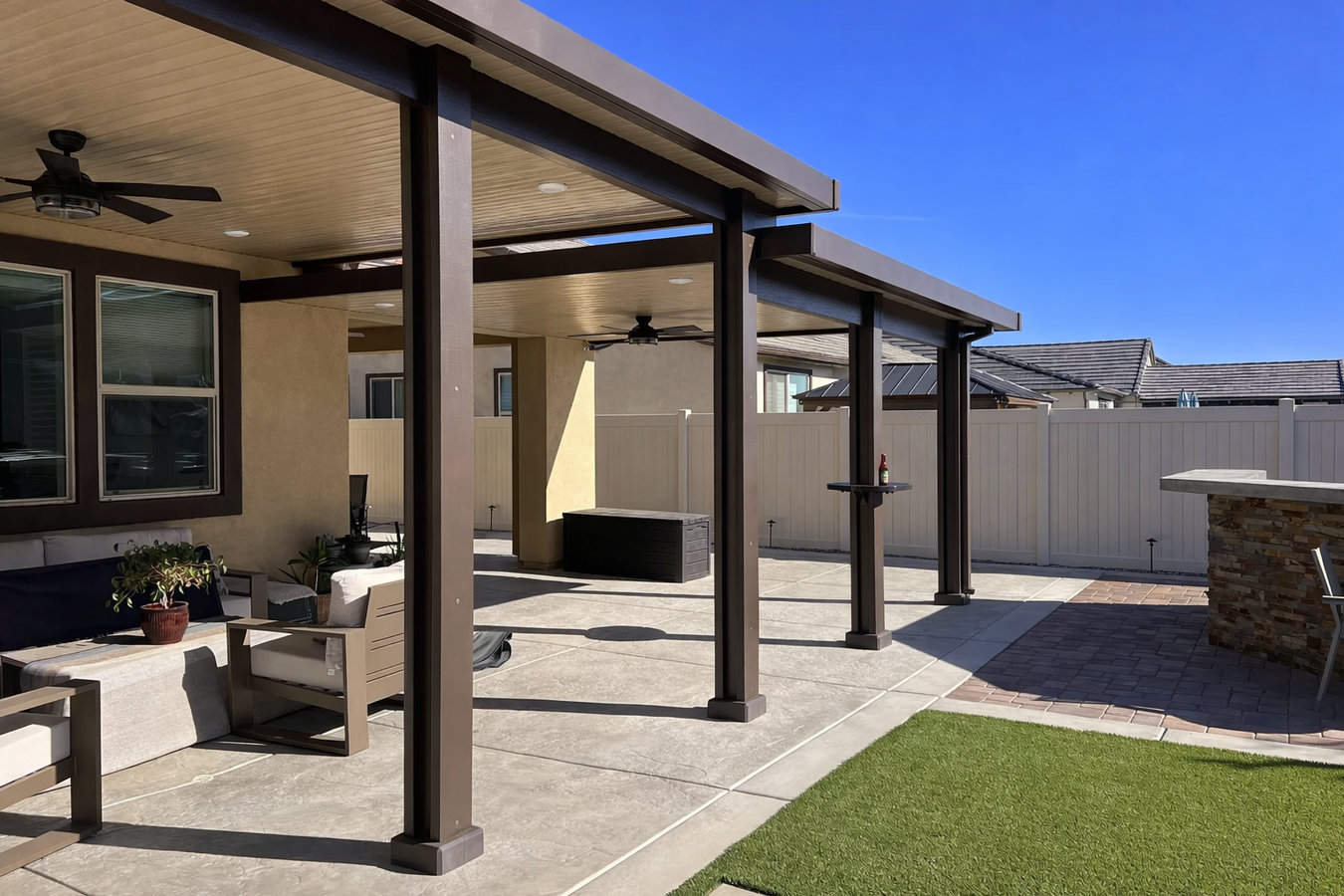
If your patio sits empty all summer because of Glendale heat, a properly installed cover changes that. We install permitted aluminum, insulated, and wood-framed covers that give you real shade and a space your family will actually use.
Patio cover installation in Glendale, CA attaches a permanent shade structure to the back of your home, shades your outdoor space, and - when properly built - protects both your family and your backyard from the sustained UV exposure that makes Glendale summers difficult to enjoy. Most standard attached covers go up in one to two days of active work once permits are approved, with the City of Glendale's permit review adding two to six weeks on the front end. If your goals go further toward a fully enclosed outdoor room, our sunroom design and patio enclosures services are worth exploring during the estimate visit.
In Glendale, patio covers are not a luxury - they are a practical solution to a real problem. The city sits inland from the coast in the San Fernando Valley foothills, where summer temperatures regularly reach the mid-90s and higher, and south- or west-facing patios can become completely unusable by mid-morning from May through October. Homeowners here consistently prioritize solid or insulated roof panels over open-lattice designs because they want real shade, not just filtered light. The material choice matters too - Glendale's combination of intense UV exposure, occasional heavy winter rain, and seismic activity all affect how a cover should be built and what materials hold up over time.
A patio cover is a permanent structure under California's building code, which means permits and inspections are required - and that is a good thing for you. The National Association of Home Builders notes that proper ledger board attachment and concrete footing depth are the two most critical quality factors in any attached patio structure - both of which a city inspector will verify when they review your completed cover.
If you find yourself avoiding your patio from May through October because it is simply too hot, that is the clearest sign a patio cover would change how you live in your home. Glendale's summer heat is intense and sustained - without shade, a south- or west-facing patio can feel like standing in an oven by mid-morning. A solid cover makes the space genuinely comfortable again.
If your patio furniture looks years older than it is, or your outdoor rug or wood decking is bleaching and splitting, that is direct evidence of how much UV exposure your backyard is getting. Glendale's sun is strong enough to degrade most outdoor materials within a season or two without protection. A patio cover shields both you and your belongings from that constant exposure.
If your home faces west or southwest and your back rooms feel noticeably hotter in the afternoon, a patio cover positioned over that door or window can reduce the heat coming in. This is a common issue in Glendale's hillside and valley neighborhoods where homes were built before energy efficiency was a priority. Blocking that direct sun before it hits the glass is one of the most effective ways to reduce cooling costs in summer.
In Glendale's competitive real estate market, a permitted, professionally installed patio cover is a visible upgrade buyers notice immediately. If your backyard currently has an exposed concrete slab with no shade, adding a cover transforms the space into something a buyer can picture themselves using. It is one of the few outdoor improvements that tends to pay back a meaningful portion of its cost at resale.
The right cover depends on your home's architecture, how you plan to use the space, and how much maintenance you are willing to do over time. We install aluminum covers for homeowners who want durability and near-zero maintenance - aluminum does not rust, rot, or need repainting, and Glendale's dry climate is about as favorable as it gets for aluminum structures. We also install wood-framed covers for homeowners whose older Craftsman or Spanish Colonial homes call for a more natural material - wood can be painted or stained to match your existing trim and roofline so the addition looks deliberate rather than tacked on. For maximum heat reduction, insulated solid-roof panels block significantly more heat than standard aluminum, which matters in a city where afternoon temperatures can stay above 90 degrees F for weeks at a time. Every project is designed with Glendale's permit requirements in mind - nothing gets built until the city has reviewed and approved the plans. Homeowners who want to take the next step toward a fully enclosed space can explore our sunroom design service, which covers layout, materials, and design choices for full room additions.
We also offer covers with integrated electrical for ceiling fans and outdoor lighting. Many Glendale homeowners add a fan at the time of installation because Glendale's summer evenings stay warm well into September and a ceiling fan makes a covered patio feel genuinely comfortable after dark. Adding electrical during initial installation is far simpler and cleaner than retrofitting it later - the wiring runs through the framing before the roof panels go on. Homeowners who want a fully enclosed version of this outdoor space, with walls and windows, can look at our patio enclosures service as a natural next step.
Homeowners who want low-maintenance shade and rain protection that connects seamlessly to the back of their home.
Homeowners who want maximum heat reduction - insulated panels block heat more effectively than standard aluminum.
Homeowners who want a natural, paintable structure that matches the architectural style of an older Glendale home.
Homeowners who want a fully functional outdoor living space that works through warm Glendale evenings.
Glendale's older housing stock is one of the biggest factors that separates a local contractor from an out-of-area one. A large share of single-family homes in Glendale were built between the 1920s and 1960s, and their exterior walls often have stucco over wood framing or older construction materials that require specific hardware when attaching a ledger board. A contractor who does not assess the wall structure before choosing an attachment method is cutting a corner that can cause the cover to loosen or pull away from the house over time - particularly after the ground shifts during an earthquake. Glendale also has strict building code requirements for post footings because of the region's seismic activity, and those requirements add a step that some contractors who work primarily in other markets are not accustomed to.
We serve homeowners throughout the Glendale area and nearby communities, including La Canada Flintridge and Burbank. Each city has its own permit office, building requirements, and inspection process - knowing those differences before a project starts saves time and avoids revision requests that delay your timeline.
We respond within 1 business day to schedule your free in-person estimate. We ask a few quick questions first - the size of your patio, what material you are leaning toward, and whether you have any existing structure we need to work around.
We visit your yard, measure the patio, assess the wall attachment point, and show you material options in person. You receive a written quote that breaks down labor, materials, permit fees, and any new footing work separately - not a single lump sum.
Once you sign, we submit the permit application to the City of Glendale's Building and Safety Division. If your neighborhood has an HOA, we prepare that submission at the same time so both reviews run in parallel. Plan for two to six weeks for city approval.
Most standard patio covers go up in one to two days once permits are approved. The city inspector visits after completion to confirm the structure meets Glendale's requirements. We walk you through the finished cover and leave the site clean before we go.
We respond within 1 business day. Free in-person visit, material samples on hand, written quote with permit fees included - no pressure.
(747) 609-3881Glendale sits in a seismically active part of Southern California, and the city's building code requires post footings and ledger attachments built to specific depth and hardware standards. We follow those requirements on every job - not because the inspector is watching, but because a cover that shifts during ground movement is a safety issue.
A large share of Glendale's housing was built between the 1920s and 1960s, and older construction sometimes has wood framing, stucco, or wall materials that require special hardware when attaching a ledger board. We assess the wall structure at the estimate visit and choose the right attachment method before any drilling begins.
We submit directly to the City of Glendale Building and Safety Division, coordinate all required inspections, and deliver your signed permit at project close. Your cover is fully on record - which protects you at resale and gives you independent verification that the work was built correctly.
Many Glendale neighborhoods - including Verdugo Woodlands, Montecito Park, and Rossmoyne - have active HOA review processes. We prepare your design documentation and submit to the HOA at the same time as the city permit, so you are not waiting sequentially on two separate timelines.
Every patio cover we install is permitted, inspected, and documented before the project closes. That means your structure is on record as a legal, city-verified addition - not a liability to explain when a buyer's inspector walks your property. You can verify any contractor's California license through the California Contractors State License Board before signing anything - and we encourage you to do exactly that.
For homeowners who want to go beyond a basic cover and design a full outdoor room with custom materials, rooflines, and interior finishes.
Learn MoreThe next step up from a cover - adds walls and windows to create a partially or fully enclosed outdoor living space.
Learn MorePermit slots fill up before summer - locking in your start date now means a shaded, finished patio before the heat peaks.